
English| EUR
Suggested for you
More currencies
Choose a language
Corralejo sits at the northern tip of Fuerteventura, a working harbour town that grew into one of the Canary Islands' busiest resorts without ever losing its fishing-village core. Travellers ask whether the place is comfortable to walk after dark, whether the water is swimmable, and where the genuine hazards sit. This page separates the perceived risks from the measurable ones.
Quick answer
Corralejo is considered a low-risk destination. It is a public town with free access at 0 EUR and no gates or closing times — the streets are open 00:00–23:59, seven days a week. Statistically, the greater dangers are environmental rather than criminal: Atlantic currents off the Grandes Playas, strong UV levels, and dehydration on the dune trails.
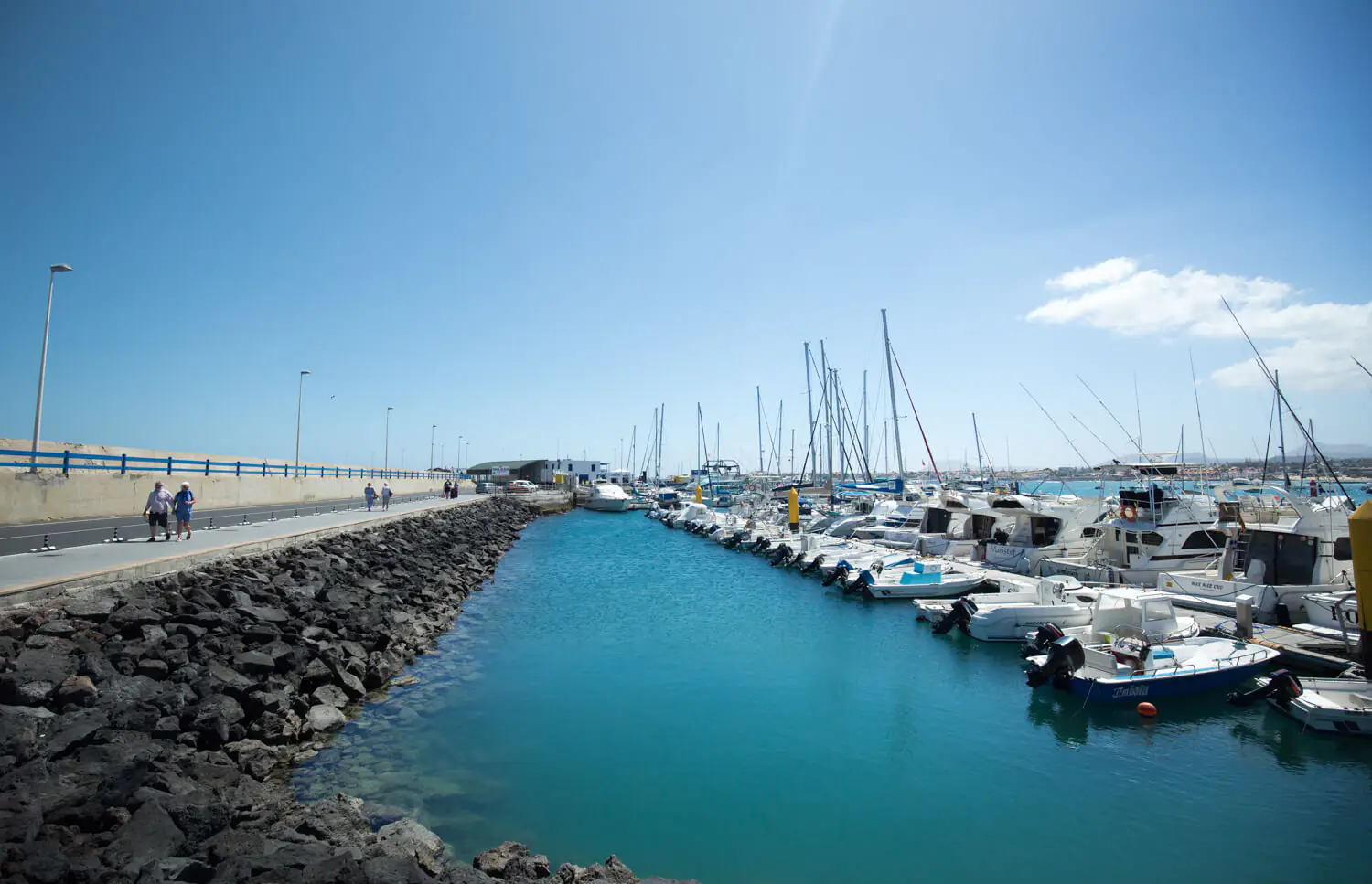
Fuerteventura records among the lowest violent crime figures in Spain, and Corralejo — a town of roughly 20,000 residents in the municipality of La Oliva — sits comfortably within that pattern. The question of whether is Corralejo safe usually stems from unfamiliarity rather than incident reports. Petty theft exists, as it does in any resort with a high seasonal turnover, and it clusters where bags are left unattended: the Waikiki and Muelle Chico beaches, the terraces along Calle Iglesia, and the queue for the Lanzarote ferry at the Muelle Comercial. Violent incidents are rare enough to make local news when they occur. The environment is the more honest concern. The Parque Natural de Corralejo — the protected dune field stretching south toward El Jable — offers no shade, no water points and few landmarks, which catches out walkers who underestimate distances. Offshore, the strait between Corralejo and Isla de Lobos generates real currents; the beaches flagged for surf near Rocky Point are not the same proposition as the sheltered lagoons by the harbour. Green, yellow and red flags are posted daily and are worth reading before entering the water. A Corralejo safety guide that ignores the Atlantic misses the point entirely. Context matters for the town itself. Corralejo divides loosely into the old harbour quarter, the pedestrianised centre around Avenida Nuestra Señora del Carmen, and the hotel corridor running north along the Grandes Playas. All three are well lit and populated well into the evening, particularly through the summer season. Solo travellers and families report the same experience: visible Policía Local presence, marked pharmacies, and a small municipal health centre. What to do with that answer is practical. Treat Corralejo safety concerns as a matter of preparation rather than avoidance — water, sun cover, flag awareness, and the usual attention to belongings on a crowded beach. Anyone still weighing whether is Corralejo safe before booking excursions inland or across to Lobos will find the answer sits with conditions and timing rather than the destination itself. The dedicated sections below cover arrival timing, common visitor errors and getting around.
“The environment is the more honest concern — the Atlantic, not the streets, is what catches visitors out.”
Corralejo is a safe town with free public access, but most incidents involve visitors misjudging the sun, the sea, or the terrain. These are the failure modes that catch people out most often.
Underestimating the Fuerteventura sun and constant trade wind
The breeze masks how fast you burn. Apply high-factor sunscreen before leaving, reapply every two hours, and carry more water than feels necessary — dehydration builds quietly on windy days.
Swimming without checking the beach flag first
Check the flag at the lifeguard post before entering the water. Red means no swimming, yellow means caution and stay shallow; the Grandes Playas stretch has strong currents and shore break that change through the day.
Treating unstaffed beaches as equivalent to patrolled ones
Many stretches north of town have no lifeguard cover. If you swim there, stay within your depth, never swim alone, and avoid entering when waves are breaking hard.
Handling a buggy or quad like a road car
Off-road vehicles roll easily on loose volcanic gravel. Brake before turns rather than during them, keep distance from the vehicle ahead to avoid dust blindness, and keep the helmet and seatbelt on throughout.
Walking the dunes in flip-flops at midday
Sand surfaces reach burning temperatures and the dune field offers no shade. Wear closed shoes, carry water, and plan longer walks well outside the middle of the day.
Leaving valuables visible in a parked hire car
Park in overlooked spots and take everything with you. Opportunistic break-ins at remote beach and dune car parks are the most common problem visitors report.
Corralejo is a working town inside a protected dune park, so conduct matters as much as caution. Beach flag rules, private land boundaries and Spanish traffic law carry real consequences for visitors who ignore them.
Corralejo is located on the northern tip of Fuerteventura, accessible via the main FV-1 road. Most visitors arrive by bus or rental car, which are reliable methods for reaching the town center.
Line 6 from Puerto del Rosario to Corralejo Bus Station
FV-1 road from Puerto del Rosario
Direct from Fuerteventura Airport (FUE)
Within Corralejo town center
For those driving, public parking is available throughout the town, though areas near the port can become congested. Follow the address Corralejo, 35660 La Oliva, Las Palmas, Spain to reach the town center safely.
Corralejo is a public town, meaning there are no entrance fees or tickets required to access its streets, beaches, or common areas. Costs only apply if you choose to participate in private activities or excursions.
Verdict: A typical visitor pays 0 EUR for town access, with costs only incurred if booking private tours or services.
Everything you need to know about is corralejo safe
Corralejo is widely considered a safe destination for solo travelers, offering a welcoming atmosphere throughout the town. As a popular tourist hub, local law enforcement maintains a consistent presence to ensure general public safety.
While petty crime like pickpocketing can occur in busy areas, is Corralejo safe when you practice common sense and secure your belongings. Visitors should remain aware of their surroundings in crowded locations to minimize risks.
Most tourist areas are well-lit and populated, meaning is Corralejo safe for evening strolls along the promenade. Stick to well-traversed streets and keep your mobile devices and valuables out of sight when moving between venues.
Safety standards in Corralejo are comparable to other major Fuerteventura resorts, making it a reliable choice for holidaymakers. Infrastructure is modern and the local community is accustomed to hosting international guests year-round.
Families often find the town very secure, though is Corralejo safe also depends on supervising children near the coastline and busy roads. The public facilities are well-maintained and suitable for visitors of all ages.
When joining an excursion, listen to the guide's instructions regarding vehicle operation and trail safety. Proper equipment usage and following designated routes are the most effective ways to enjoy an excursion securely.
Fuerteventura Buggy Safari
Read more Tickets & toursCorralejo Buggy Tours
Read more Tickets & toursCorralejo Dune Buggy Tour
Read more Tickets & toursBuggy Ride Corralejo
Read more GuideHow to get from Fuerteventura airport to Corralejo
Read more Tickets & toursDune Buggy Safari Corralejo
Read more